In this guide
Labrador Retrievers need at least an hour of activity a day, carefully measured meals (they gain weight easily) and weekly ear checks. Get those three right and you’ve covered the biggest parts of Lab care.
Labrador at a glance
| Weight (AKC standard) | Males ~65–80 lb (29–36 kg); females ~55–70 lb (25–32 kg) |
| Height | Males 22.5–24.5 in; females 21.5–23.5 in |
| Lifespan | About 11–14 years |
| Energy | High, especially until about age 3 |
| Coat | Short, dense double coat — sheds a lot |
| Colors | Black, yellow, chocolate |
Feeding: the #1 Lab challenge
Labs are famous for loving food. Researchers have even found a gene variation in some Labradors linked to stronger hunger and easier weight gain. Extra pounds put pressure on joints that are already prone to problems.
- Feed a complete and balanced diet; large-breed puppy food while growing.
- An adult Lab at a healthy 65 lb typically needs roughly 1,400 calories a day if neutered and moderately active — get your dog’s number with the dog food calculator.
- Measure with a cup or scale. Don’t trust the “begging meter.”
- Use part of the daily kibble for training, and low-calorie extras like green beans or carrot coins.
- Slow-feeder bowls and puzzle feeders help fast eaters.
- Do the rib, waist and tummy check every few weeks.
Exercise
Labs were bred to retrieve all day. Aim for at least an hour of activity, split up:
- Brisk walks and sniff walks
- Fetch and retrieving games
- Swimming — most Labs love it (dry ears afterwards)
- Training sessions and food puzzles for the brain
Young Labs (under 18 months) shouldn’t do long runs or repetitive jumping while their joints are developing.
Exercise-induced collapse (EIC): some Labs carry a genetic condition that can make them weak and wobbly in the back legs after a few minutes of very intense exercise. A DNA test exists — ask your breeder or vet. If your Lab ever collapses during exercise, stop, cool them down and see a vet.
Grooming
- Brush weekly with a rubber curry brush or deshedding tool; several times a week in spring and fall.
- Bathe every 6–12 weeks or when dirty — see how often to bathe your dog.
- Check ears weekly, especially after swimming: redness, smell or head shaking can mean infection (head tilt warning signs).
- Trim nails every 3–4 weeks (how short nails should be).
Health watch-outs
- Hip and elbow dysplasia — joints that don’t form properly; staying lean helps a lot.
- Obesity — very common in the breed.
- Ear infections — floppy ears + water.
- Eye conditions, such as progressive retinal atrophy (PRA) — DNA tests are available.
- Exercise-induced collapse — see above.
- Cruciate ligament injuries in the knee, more likely in overweight dogs.
When choosing a puppy, ask the breeder for hip, elbow and eye screening of both parents and DNA test results.
Lab vs. Golden Retriever
| Labrador | Golden Retriever | |
|---|---|---|
| Coat | Short, sheds a lot | Long feathering, sheds a lot, more brushing |
| Grooming time | Low | Medium |
| Energy | High | High |
| Weight risk | Very high | High |
| Good with families | Yes | Yes |
More in our Golden Retriever care guide.
Frequently asked questions
How big do Labrador Retrievers get?
According to the AKC breed standard, males usually weigh about 65–80 lb (29–36 kg) and females about 55–70 lb (25–32 kg). Working-line Labs are often lighter and leaner than show lines.
Why is my Labrador always hungry?
Labs are famously food-motivated. Researchers have found a gene variation in some Labradors that is linked to stronger hunger and a higher tendency to gain weight. That makes measured meals and low-calorie treats especially important.
How long do Labradors live?
Most Labs live around 11 to 14 years. Keeping them lean is one of the best-documented ways to support a longer, healthier life.
Lab or Golden Retriever: which is easier?
Both are friendly, trainable family dogs. Labs have a shorter coat that’s easier to groom (but still sheds a lot); Goldens need more brushing. Both need daily exercise and careful weight control.
Sources
- American Kennel Club — Labrador Retriever breed page
- Cornell Riney Canine Health Center — Canine Health Topics
- VCA Animal Hospitals — Obesity in Dogs
We summarize what these organizations publish in plain English. How we write and check our guides.
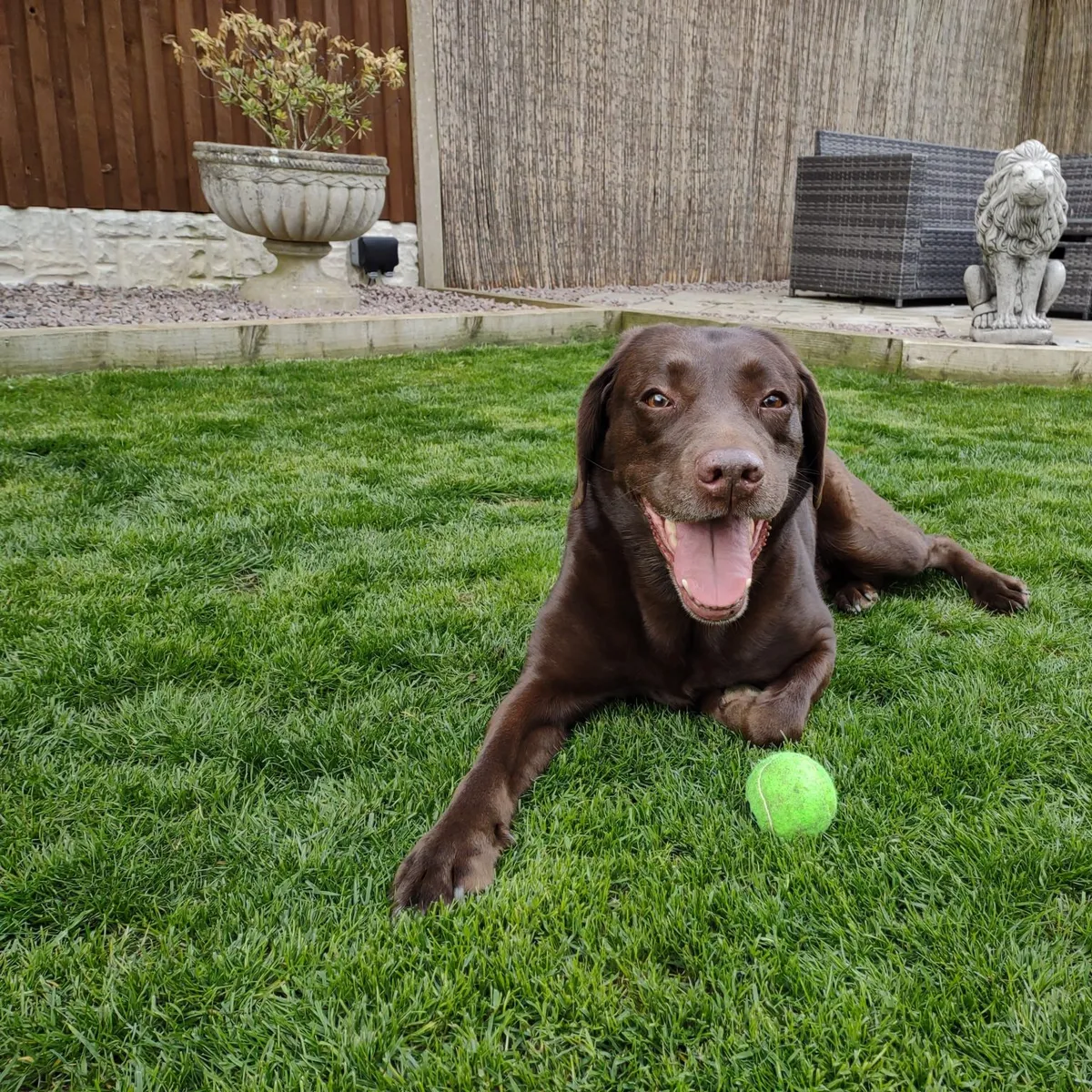
Photo: “A happy chocolate Labrador retriever lying on a grassy lawn with a green tennis ball in front of it.” by David Allsop, CC0, cropped.
Not a substitute for your vet
This guide is general information for healthy adult dogs. Every dog is different — age, size, allergies and health conditions all matter. Ask your veterinarian before changing your dog’s diet or care.
Possible poisoning? US: ASPCA Animal Poison Control (888) 426-4435 or Pet Poison Helpline (855) 764-7661 (fees may apply). Elsewhere: call your vet or nearest emergency animal hospital right away.
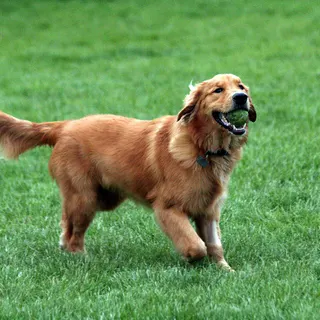 Up next Golden Retriever Care Guide: Food, Exercise, Grooming & Health

Save this for later — pin it to your dog board so you can find it fast.
Pin itKeep reading
-

Can Dogs Eat Bananas? Yes.
Bananas are a safe, healthy treat for most dogs in small amounts. How much to give by size, how to serve it, and when to skip it.
Small dog: 1–2 slices · Large: ½ banana -
Can Dogs Eat Cheese?
Most dogs can have small pieces of plain cheese. Which cheeses are better, which to avoid, how much to give and when cheese is a bad idea.
Pea-sized pieces of plain cheese -

Can Dogs Eat Grapes? No.
Grapes and raisins can cause sudden kidney failure in dogs, even in small amounts. Learn the signs, what to do right away, and safer fruit swaps.
No known safe amount — call your vet