Is My Dog Overweight? 30-Second Quiz
Put your hands on your dog and answer 4 quick questions. You’ll see where your dog sits on the body condition scale vets use — and what to do next.
For general guidance only — it can’t examine your dog and doesn’t replace your vet. If you’re worried about your dog’s health, talk to your veterinarian.
How this quiz works
Vets don’t judge a dog’s weight by the number on the scale alone. A 70 lb Labrador can be perfectly fit, and a 70 lb Labrador with a smaller frame can be carrying 10 extra pounds. Instead, they use a body condition score (BCS): a simple hands-on check of how much fat covers the ribs, waist, tummy and hips.
This quiz walks you through the same four checks. Each answer is scored, and the average puts your dog on the common 1–9 scale: 1–3 is underweight, 4–5 is ideal, 6–7 is overweight and 8–9 is obese.
What each result means
Underweight (1–3)
Ribs, spine and hip bones are easy to see, and there’s little or no fat. Some breeds, like Greyhounds and Whippets, are naturally lean — but if your dog has lost weight without trying, or you can see their bones, book a vet visit. Weight loss can be a sign of illness.
Ideal (4–5)
You can feel the ribs easily without pressing, there’s a clear waist from above and the tummy tucks up from the side. Great job — keep measuring meals and counting treats.
Overweight (6–7)
The ribs are harder to feel, the waist is fading and the tummy line is flat. This is very common: vet surveys suggest more than half of pet dogs in the US are overweight or obese, and many owners don’t realize it. The good news is that small changes — measured meals, fewer treats, a bit more walking — usually make a real difference.
Obese (8–9)
The ribs can’t be felt, there’s no waist and there are clear fat deposits on the back, hips and tail base. Extra weight puts strain on joints, the heart and breathing, and is linked to a shorter life. Ask your vet for a weight-loss plan — they’ll rule out medical causes and set a safe target.
Tips for an accurate check
- Use your hands. Fluffy and double-coated dogs can hide (or fake) extra weight.
- Compare to the back of your hand. Ideal ribs feel like the knuckles on the back of your hand. Overweight ribs feel like your palm.
- Check every 2–4 weeks and keep a note, so you notice gradual changes.
- Puppies and seniors change fast — your vet is the best judge at those ages.
What to do next
If your dog scored above ideal, start with our guide to helping an overweight dog, then use the dog food portion calculator to work out a daily amount based on your dog’s ideal weight. Swap fatty treats for low-calorie options from our list of human foods dogs can eat, like green beans and carrot sticks.
Frequently asked questions
What is a body condition score?
It is a hands-on way vets rate a dog’s body fat, usually on a 1–9 scale. 1 is very thin, 4–5 is ideal and 9 is severely obese. It looks at ribs, waist, tummy tuck and fat pads rather than the number on the scale.
Is this quiz accurate?
It uses the same checks vets use, so it’s a useful home check. But only a vet can examine your dog properly, check for medical causes of weight change and set a safe target weight.
My dog is fluffy. How do I do this?
Rely on touch, not sight. Wet the coat or use your hands to feel the ribs, waist and hips. Thick double coats can make a dog look heavier — or hide extra weight.
How fast should an overweight dog lose weight?
Slowly. Many vets aim for roughly 1–2% of body weight per week. Losing weight too fast is not healthy, so ask your vet to set the plan.
Can a dog be overweight and still eat a ‘normal’ amount?
Yes. Food labels are a starting point, and many dogs — especially spayed, neutered or less active dogs — need less than the bag suggests. Treats and table scraps also add up quickly.
Read next
-

Is My Dog Overweight?
How to tell if your dog is overweight in 30 seconds with the rib, waist and tummy checks — plus a worked weight-loss plan with calories, cups and a weekly timeline.
You should feel the ribs easily -
How Much Should I Feed My Dog?
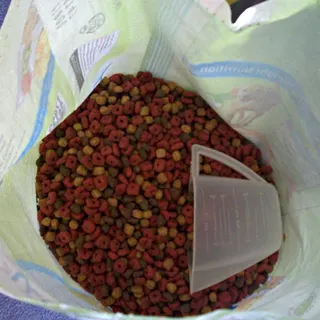
A simple dog feeding chart by weight, how to read a dog food label, how often to feed, and easy ways to tell if your dog is at a healthy weight.
30 lb dog ≈ 790 kcal a day -
15 Human Foods Dogs Can Eat
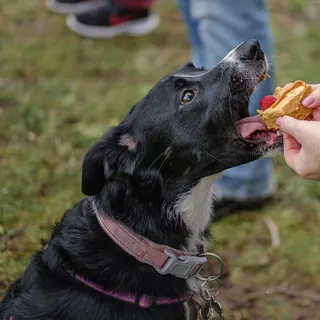
Chicken, carrots, blueberries, pumpkin and more: 15 everyday foods that are safe for most dogs, with portion tips and the mistakes to avoid.
Plain, small amounts, ≤10% of calories