In this guide
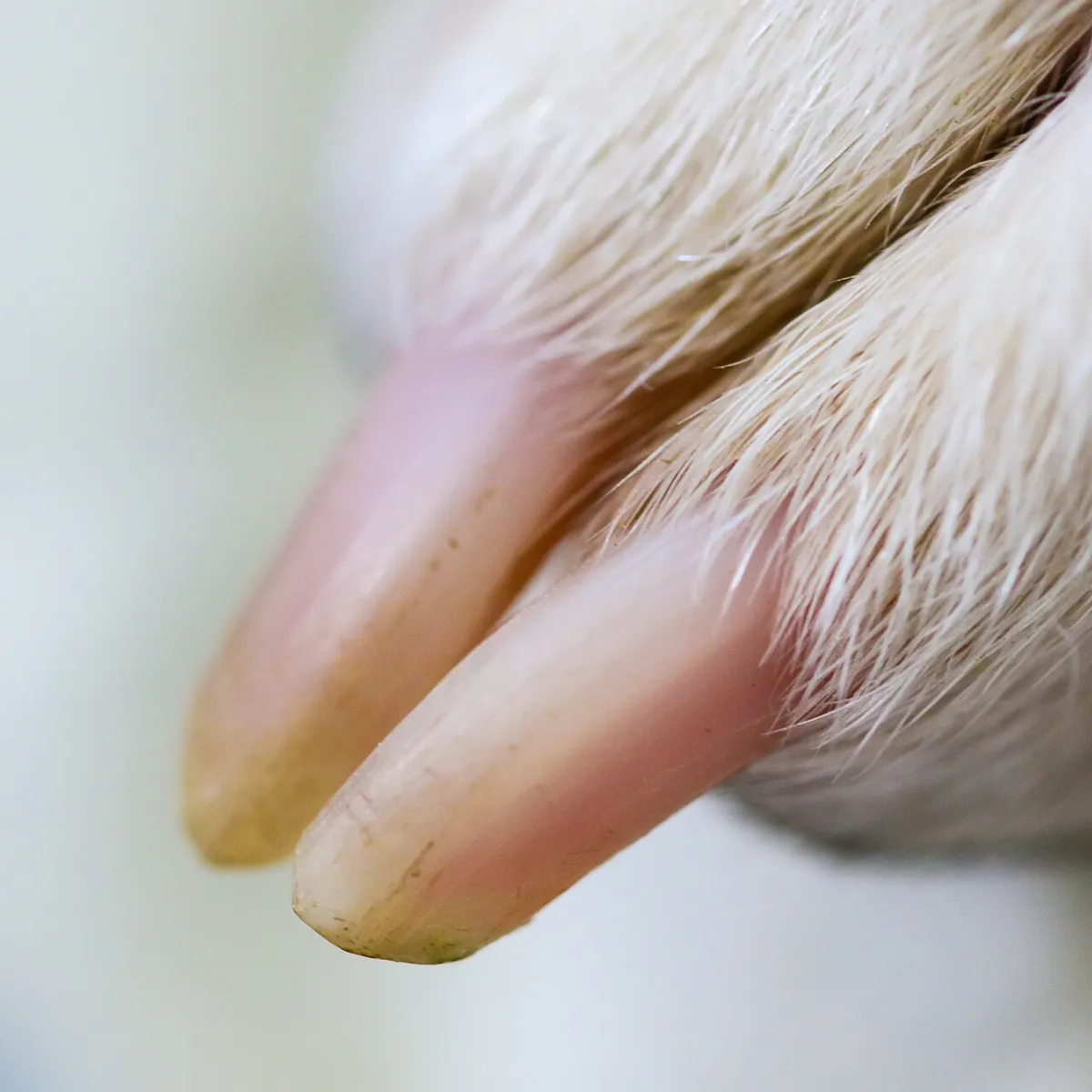
Your dog’s nails are the right length when they don’t touch the floor while your dog is standing. If you can hear click-click on hard floors, they’re too long and it’s time for a trim.
The 10-second floor test
- Stand your dog on a hard, flat floor.
- Look from the side at eye level.
- Good: there’s a small gap between the nail tip and the floor.
- Too long: the nail touches the floor or pushes the toe up.
Why long nails are a problem
When nails hit the ground, they push the toes sideways or upward with every step. Over time this can change how your dog stands and walks, make walking uncomfortable (especially for older dogs) and lead to split, broken or ingrown nails. Long dewclaws — the “thumb” nails higher on the leg — can curl into the pad.
What you need
- Dog nail clippers (scissor or guillotine style) or a nail grinder
- Styptic powder (or plain cornstarch)
- Small, high-value treats
- Good light
How to trim, step by step
- Get comfortable. Sit on the floor with your dog, or have a helper hold and feed treats.
- Hold one paw gently and press the pad lightly to push the nail out.
- Find the quick. On light nails it’s the pink part inside. On dark nails you can’t see it, so go slowly.
- Trim a thin slice from the tip, at a slight angle, following the curve of the nail.
- Check the cut end. On dark nails, stop when you see a small dark dot in the center of the cut surface — the quick is close.
- Treat after every nail (or every paw at first).
- Don’t forget the dewclaws.
- Smooth sharp edges with a file or grinder.
Bringing long nails back: the slow method
The quick grows out with the nail. If nails have been long for a while, you can’t cut them short in one go without bleeding. Instead, trim a tiny bit every 1–2 weeks — the quick gradually moves back. Walks on pavement help a little, but most dogs still need trims.
If you cut the quick
It happens to everyone. Press styptic powder onto the tip for 1–2 minutes, keep your dog calm and offer a treat. Call your vet if it doesn’t stop bleeding after 5–10 minutes of steady pressure.
Nervous dogs
- Do one nail a day at first.
- Pair the clippers with treats before you ever cut anything.
- Use a lick mat with xylitol-free peanut butter as a distraction.
- If your dog growls, struggles hard or is in pain, stop. Your vet or groomer can trim safely, and can help if a nail is torn.
Clean, short nails make it easier to keep paws healthy too — see why dog paws can smell like Fritos and how often to bathe your dog.
Frequently asked questions
How often should I trim my dog’s nails?
Most dogs need a trim every 3–4 weeks, but it depends on how fast the nails grow and how much your dog walks on rough surfaces. If you hear clicking on the floor, it’s time.
What happens if I cut the quick?
It will hurt and bleed. Stay calm, press styptic powder (or cornstarch) onto the nail tip for a minute or two, and give a treat. If bleeding doesn’t stop after 5–10 minutes of pressure, call your vet.
Are grinders better than clippers?
Both work. Grinders make it easier to take off tiny amounts and smooth edges, which helps with dark nails. Some dogs dislike the noise, so introduce it slowly.
Why do long nails matter?
Long nails push the toes up and sideways when your dog walks, which can change posture, make walking uncomfortable and increase the risk of split or torn nails.
Sources
We summarize what these organizations publish in plain English. How we write and check our guides.
Photo: “Dog nails close-up (49810706286)” by Jernej Furman from Slovenia, CC BY 2.0, cropped.

Not a substitute for your vet
This guide is general information for healthy adult dogs. Every dog is different — age, size, allergies and health conditions all matter. Ask your veterinarian before changing your dog’s diet or care.
Possible poisoning? US: ASPCA Animal Poison Control (888) 426-4435 or Pet Poison Helpline (855) 764-7661 (fees may apply). Elsewhere: call your vet or nearest emergency animal hospital right away.
 Up next How Often Should You Bathe Your Dog? (Chart by Coat Type)
Save this for later — pin it to your dog board so you can find it fast.
Pin itKeep reading
-

How to Keep Your Dog Cool in the Heat
The 7-second pavement test, safe walking times, which dogs overheat fastest and the signs of heatstroke — for US and Australian summers.
7-second pavement test before walks -

12 Signs Your Dog Is Happy
Soft eyes, a wiggly body, the play bow and more: 12 clear signs your dog is happy, plus the stress signals that are easy to miss.
Loose body, soft eyes, open mouth -

Why Does My Dog Tilt Their Head?
Most head tilts mean your dog is listening hard. A tilt that doesn’t go away, with scratching, head shaking or wobbling, can be an ear or balance problem.
Constant tilt + scratching = see the vet