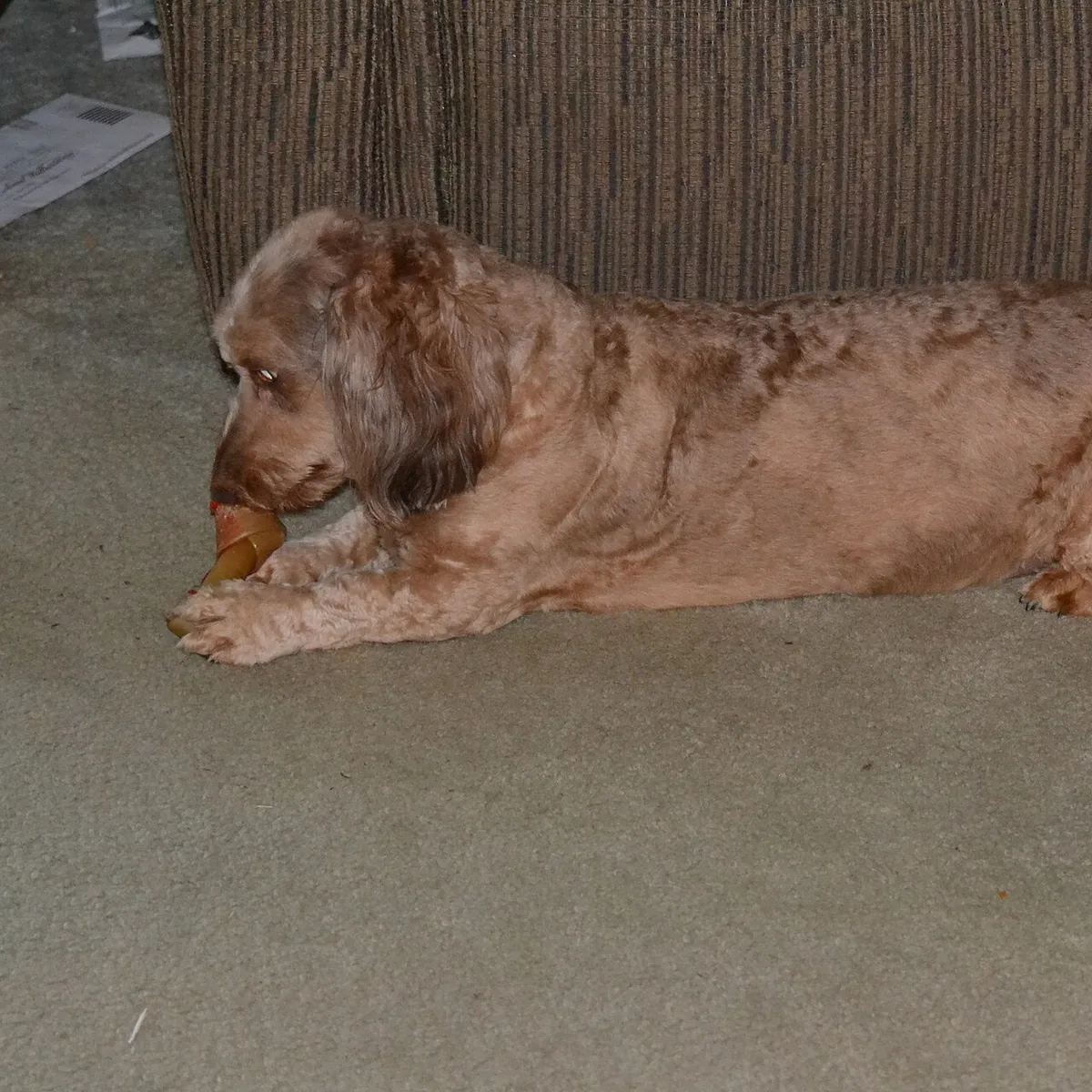
In this guide
- 1. Cooked bones
- 2. Raw yeast dough
- 3. Fatty scraps (turkey skin, ham, bacon, gravy)
- 4. Corn on the cob
- 5. Fruit pits and seeds
- 6. Very salty snacks
- 7. Moldy food and compost
- Poison or blockage? Two different emergencies
- Salt: how much is actually dangerous?
- Bonus: a few “maybe” foods
- What to do if your dog eats one of these
- Cookout and party check
- Mistakes owners make
- Safe swaps your dog will love
Cooked bones, raw yeast dough, fatty scraps, corn cobs, fruit pits, very salty snacks and moldy food are 7 more things dogs shouldn’t eat. Most of them aren’t poisons: they choke, block the gut or trigger pancreatitis.
Part 1 covers the classic toxic foods (chocolate, grapes, xylitol, onions, macadamias, alcohol and caffeine). This part covers the ones people hand to their dogs without thinking — many of them at holiday meals.
1. Cooked bones
It feels natural to give a dog a bone, but cooked bones (chicken, turkey, pork, beef, lamb) are brittle. They can splinter into sharp pieces that cause:
- Choking
- Broken teeth and mouth cuts
- Blockages in the stomach or intestines
- Tears in the gut lining, which can be life-threatening
Chicken wings, rib bones and the turkey carcass are the usual culprits. If you want a chew, ask your vet about safe, size-appropriate chew options.
2. Raw yeast dough
Raw bread or pizza dough is double trouble. In the warm stomach, the dough keeps rising, which can stretch the stomach painfully and cause bloating. At the same time, the yeast produces alcohol, which gets absorbed into the bloodstream.
Keep rising dough well out of reach — on top of the fridge is not too high for a determined Labrador.
3. Fatty scraps (turkey skin, ham, bacon, gravy)
Rich, fatty foods are one of the most common triggers of pancreatitis in dogs — a painful inflammation of the pancreas. Signs include vomiting, a sore belly (some dogs stand in a “praying” position with their front end down), diarrhea and not wanting to eat.
Holiday leftovers are the classic cause: turkey skin, ham fat, bacon grease, gravy, buttery mashed potatoes and sausage. Small, fatty treats add up quickly for a small dog.
4. Corn on the cob
Corn kernels are fine for most dogs in small amounts. The cob is not. Dogs tend to swallow chunks of cob that are too big to pass, and cobs are a very common cause of intestinal blockages — which often need surgery.
Throw cobs away immediately after barbecues and keep the trash can closed.
5. Fruit pits and seeds
The pits of peaches, plums, cherries, apricots and mangoes, plus apple cores, can cause choking or blockages. Many of these pits and seeds also contain compounds that release cyanide when chewed. The flesh of most of these fruits is fine in small amounts — it’s the stones and cores that cause problems.
Avocado pits are a big choking and blockage risk too, and avocado flesh is very high in fat.
Is the cyanide in a swallowed pit the real danger?
Usually not. The Pet Poison Helpline’s apricot page rates a single swallowed pit as a low risk for cyanide poisoning. The bigger risk is the pit getting stuck. The same page rates hulled apricot kernels (bitter raw apricot seeds) as a high cyanide risk. So a peach stone needs a call about blockage. A bag of apricot kernels needs a call about poisoning.
6. Very salty snacks
Chips, pretzels, salted popcorn, salted nuts and salty meats aren’t good for dogs. A large amount of salt can cause excessive thirst and urination, vomiting and diarrhea, and in extreme cases salt poisoning. Homemade play dough and rock salt (used on icy paths) are surprisingly common sources of salt poisoning.
If your dog grabs a few chips, they’ll probably be fine, but keep salty snacks off the menu and make sure fresh water is always available.
7. Moldy food and compost
Moldy bread, cheese, nuts and leftovers — and the compost bin — can contain mycotoxins, toxins made by some molds. They can cause vomiting, agitation, tremors and seizures, sometimes within an hour.
Use a dog-proof compost bin and don’t give your dog food that’s past its best. If it’s too old for you, it’s too old for them.
Poison or blockage? Two different emergencies
The seven foods above hurt dogs in three different ways, and each needs a different kind of watching.
| Blockage or injury | Toxin | Pancreatitis | |
|---|---|---|---|
| Foods in this list | Cooked bones, corn cobs, fruit pits | Raw yeast dough, moldy food, large amounts of salt | Fatty scraps |
| How fast it shows | Hours to days | Mold toxins: from 1–2 hours to several hours. Dough: as it rises and ferments | Can be set off by a single fatty meal |
| Signs to watch | Vomiting, not eating, sore belly, straining to poop or passing only small amounts | Wobbliness, tremors, a swollen belly, retching with nothing coming up | Vomiting, sore belly, the “praying” stance, diarrhea |
| What the vet may do | X-rays; surgery if it’s stuck | Decontamination and supportive care | Pain and nausea control, IV fluids; severe cases stay 2–4 days |
Sources: blockage signs and treatment from VCA’s foreign body guide; mold timing from Merck’s tremorgenic mycotoxin chapter, which also notes that recovery can take days to weeks; dough from the Pet Poison Helpline; pancreatitis from VCA.
The awkward one is the blockage. A dog can eat, drink and act normally for a day or more while a piece of cob sits in the gut. VCA notes that some objects pass on their own, but not all of them do, and only an X-ray can tell you which kind you have.
Salt: how much is actually dangerous?
A few chips won’t poison a dog. The real cases come from concentrated sources. According to the Merck Veterinary Manual, signs of salt poisoning can appear in dogs at 2–3 g of salt per kg of body weight. The lethal dose is around 4 g/kg. Here’s that in teaspoons of table salt (about 6 g each):
| Dog weight | Signs possible from | Possibly lethal from |
|---|---|---|
| 10 lb (4.5 kg) | 9–14 g, about 1½–2 tsp | about 18 g, 3 tsp |
| 25 lb (11 kg) | 23–34 g, about 4–5½ tsp | about 45 g, 7½ tsp |
| 50 lb (23 kg) | 45–68 g, about 7½–11 tsp | about 90 g, 15 tsp |
| 75 lb (34 kg) | 68–102 g, about 11–17 tsp | about 136 g, 23 tsp |
The usual causes are homemade play dough and salt-dough ornaments, which the Pet Poison Helpline says can cause severe, sometimes fatal salt poisoning. It also happens with rock salt licked off paws, and when someone tries to make a dog vomit by feeding it salt.
Bonus: a few “maybe” foods
Some foods aren’t toxic but don’t suit every dog:
- Dairy (milk, ice cream, cheese): many adult dogs don’t digest lactose well. Small amounts of plain cheese are usually fine as a training treat.
- Raw meat and raw eggs: there is a risk of bacteria such as salmonella, for your dog and your family. Talk to your vet before feeding raw.
- Nutmeg and strong spices: large amounts of nutmeg are toxic; spicy food can upset the stomach.
What to do if your dog eats one of these
If your dog swallowed something risky — especially a bone, cob or pit — call your vet, even if your dog seems fine. Watch for vomiting, retching without bringing anything up, a swollen or painful belly, not eating, lethargy, or straining to poop. For toxins (raw dough, mold, salt dough), call right away. US: ASPCA Animal Poison Control (888) 426-4435 or Pet Poison Helpline (855) 764-7661 (fees may apply). Australia: the Animal Poisons Helpline, 1300 869 738. Elsewhere, call your vet or nearest emergency clinic.
Your dog just swallowed a bone, cob or pit: the first hour
- Get the rest of it away from your dog, and any other dogs. Count what’s missing: two wing bones or one, a whole cob or half.
- Don’t make your dog vomit. Sharp bone splinters and big chunks of cob can do damage coming back up. Only do it if a vet tells you to and shows you how.
- Call your vet and tell them what it was, how big, how much, your dog’s weight and when it happened.
- Watch for the next 2–3 days if your vet says to monitor at home. Look at every poop, and note if your dog eats less, vomits, strains or seems sore when picked up.
- Go in right away if your dog vomits repeatedly, won’t eat, has a tight or painful belly, or retches with nothing coming up.
Cookout and party check
The foods in this list cluster at barbecues and parties, where lots of people are each handing over “just one bite”.
| On the table | The problem | Swap it for |
|---|---|---|
| Corn on the cob | Cob blockage | A few plain kernels cut off the cob |
| Ribs, wings, chops | Cooked bones splinter | Plain meat cut off the bone, no skin or sauce |
| Sausages, bacon, burger fat | Pancreatitis | A small piece of lean, plain chicken |
| Peaches, cherries, mango | Pits | Sliced flesh, pit removed |
| Chips, pretzels, salted nuts | Salt and fat | Carrot or cucumber sticks |
| Bread or pizza dough rising in the kitchen | Rising dough and alcohol | Nothing. Keep it out of reach until it’s baked |
| Kebab skewers with meat juices | Swallowed skewers | Bin them straight away |
Onion, garlic, chocolate and grapes also turn up at cookouts. See Part 1 for those.
Mistakes owners make
- Waiting for the dog to “pass it”. Some things do pass. A cob or a pit often doesn’t, and a blockage gets harder and more expensive to fix the longer it sits.
- Thinking raw bones are safe because cooked ones aren’t. Raw bones can still break teeth and get stuck, and they carry bacteria.
- Putting scraps in a flimsy trash bag. After a barbecue, the first things a trash-raiding dog finds are bones and cobs. Take carcasses and cobs straight to an outdoor bin with a lid.
- Letting every guest give “just one bite”. Ten guests means ten bites. Put one person in charge of treats, or use the dog food calculator to see how small a small dog’s daily budget really is.
- Leaving salt-dough ornaments on a low branch. Hang them high, or skip them in homes with dogs.
- Composting without a lid. Merck lists compost and moldy walnuts, peanuts, dairy and pasta among the sources of the tremor-causing mold toxins.
Safe swaps your dog will love
Instead of table scraps, keep a few dog-safe treats ready for family meals:
- Plain, boneless, skinless cooked chicken or turkey
- Cooked green beans or carrot sticks
- A spoonful of plain canned pumpkin (not pie filling)
- Our easy 3-ingredient frozen dog treats
Want to know what you can share? Read our list of 15 human foods dogs can eat.
Frequently asked questions
Can dogs eat cooked chicken bones?
No. Cooked bones become brittle and can splinter, which may cause choking, mouth injuries, or blockages and tears in the gut. Plain, boneless cooked chicken is fine.
Can dogs eat turkey skin or ham?
It’s best not to. Fatty, salty, seasoned meats like turkey skin, ham and bacon can trigger stomach upset and pancreatitis, a painful inflammation of the pancreas.
Is avocado toxic to dogs?
Avocado contains persin, which is more of a concern for birds and some other animals than for dogs. For dogs, the bigger risks are the pit (choking or blockage) and the high fat content. A small piece of plain flesh is unlikely to cause harm, but it’s not a great treat.
What should I do if my dog swallowed a corn cob?
Call your vet. Corn cobs often get stuck in the intestines. Signs of a blockage include vomiting, not eating, belly pain and straining to poop. Don’t wait for these signs if you know it happened.
How much salt is toxic to dogs?
According to the Merck Veterinary Manual, signs can start at 2–3 g of salt per kg of body weight, and around 4 g/kg can be lethal. That is roughly 1½–2 teaspoons for a 10 lb dog. Homemade play dough, salt-dough ornaments and rock salt are the usual culprits.
Sources
- Merck Veterinary Manual — Bread Dough Toxicosis
- Merck Veterinary Manual — Salt Toxicosis in Animals
- VCA Animal Hospitals — Foreign Bodies in Dogs
- VCA Animal Hospitals — Pancreatitis in Dogs
We summarize what these organizations publish in plain English. How we write and check our guides.
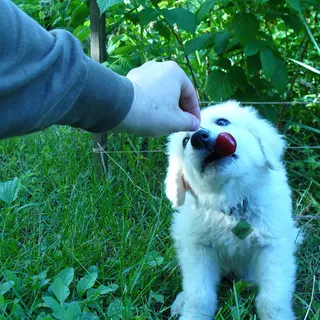
Photo: “Sizing It Up (9072799184)” by Tony Alter from Newport News, USA, CC BY 2.0, cropped.

Not a substitute for your vet
This guide is general information for healthy adult dogs. Every dog is different — age, size, allergies and health conditions all matter. Ask your veterinarian before changing your dog’s diet or care.
Possible poisoning? US: ASPCA Animal Poison Control (888) 426-4435 or Pet Poison Helpline (855) 764-7661 (fees may apply). Elsewhere: call your vet or nearest emergency animal hospital right away.
 Up next Can Dogs Eat Grapes? No — Here’s Why (and What to Do Fast)
Save this for later — pin it to your dog board so you can find it fast.
Pin itKeep reading
-
Can Dogs Eat Bananas? Yes.
Bananas are a safe, healthy treat for most dogs in small amounts. How much to give by size, how to serve it, and when to skip it.
Small dog: 1–2 slices · Large: ½ banana -
Can Dogs Eat Cheese?
Most dogs can have small pieces of plain cheese. Which cheeses are better, which to avoid, how much to give and when cheese is a bad idea.
Pea-sized pieces of plain cheese -

Can Dogs Eat Peanut Butter?
Most dogs can eat plain peanut butter in small amounts, but some brands contain xylitol, which is toxic. How to read the label and how much to give.
Check the label for xylitol first