Small amounts of dark or baking chocolate can poison a dog. If your dog ate chocolate, call your vet or a poison hotline with the type, amount and your dog’s weight.
In this guide
About 1 oz (30 g) of dark chocolate or under ½ oz (12 g) of baking chocolate can make a 20 lb dog sick — while the same dog would need around 3½ oz of milk chocolate. The type of chocolate matters more than anything else, and the safest move is always to call your vet.
Chocolate contains theobromine (plus some caffeine). Dogs break it down very slowly, so it builds up and affects the heart, nerves and stomach.
Theobromine by type of chocolate
Approximate amounts from the Merck Veterinary Manual. Real values vary by brand and cocoa percentage.
| Chocolate | Theobromine per oz (28 g) | Risk |
|---|---|---|
| White chocolate | Under 1 mg | Very low (but fatty) |
| Milk chocolate | About 44–58 mg | Moderate |
| Dark / semisweet chocolate | About 150–160 mg | High |
| Unsweetened baking chocolate | About 390–450 mg | Very high |
| Dry cocoa powder | About 400–737 mg | Very high |
The higher the cocoa percentage on the label (70%, 85%…), the closer it gets to baking chocolate.
When signs can start, by dog weight
This chart estimates how much chocolate gives a dog a dose of about 20 mg/kg of theobromine — the level where mild signs such as vomiting, diarrhea and restlessness can start. It uses the middle of the ranges above (milk 51 mg/oz, dark 155 mg/oz, baking 420 mg/oz).
| Dog weight | Milk chocolate | Dark chocolate | Baking chocolate |
|---|---|---|---|
| 10 lb (4.5 kg) | ~1¾ oz (50 g) | ~½ oz (17 g) | ~¼ oz (6 g) |
| 20 lb (9 kg) | ~3½ oz (100 g) | ~1 oz (33 g) | ~½ oz (12 g) |
| 40 lb (18 kg) | ~7 oz (200 g) | ~2⅓ oz (66 g) | ~⅞ oz (24 g) |
| 60 lb (27 kg) | ~10½ oz (300 g) | ~3½ oz (100 g) | ~1⅓ oz (37 g) |
| 80 lb (36 kg) | ~14 oz (400 g) | ~4⅔ oz (133 g) | ~1¾ oz (49 g) |
Double these amounts and you reach the range where heart problems become likely; triple them and seizures are possible. For scale: a standard US milk chocolate bar is about 1.5 oz (43 g), and a family block in Australia is often 180–200 g.
This chart is not a “safe amount” list. Dogs vary, products vary, and fat and sugar cause their own problems. Use it to understand the risk while you call for advice.
Signs of chocolate poisoning
- Vomiting and diarrhea
- Restlessness, panting, pacing
- Drinking and peeing more
- A racing or irregular heartbeat
- Muscle tremors, wobbliness
- Seizures (in severe cases)
Signs often show 6–12 hours after eating and can last a day or more.
What to do right now
- Find the wrapper. Note the type, cocoa percentage and how much is missing.
- Weigh or estimate your dog’s weight.
- Call your vet, an emergency clinic or a poison hotline. US: ASPCA Animal Poison Control (888) 426-4435 or Pet Poison Helpline (855) 764-7661 (fees may apply). Elsewhere: your vet or nearest emergency animal hospital.
- Don’t induce vomiting at home unless you’re told to.
With the numbers in hand, the vet can tell you quickly whether your dog needs to come in. Treatment often means making the dog vomit, activated charcoal, fluids and heart monitoring.
Hidden chocolate to watch for
- Brownies, cakes, muffins and chocolate chip cookies
- Hot chocolate mix and cocoa powder in the pantry
- Chocolate-covered nuts and raisins — a double risk (see macadamias and grapes)
- Advent calendars, Easter eggs and Halloween candy
- Cocoa mulch in the garden, made from cocoa bean shells
Chocolate is one of seven classic dangers in our list of foods your dog should never eat. If you want a sweet treat to share, make our 3-ingredient frozen dog treats instead, or test yourself with the daily Can My Dog Eat This? quiz.
Frequently asked questions
My dog ate one chocolate chip cookie. Is that dangerous?
For a medium or large dog, one milk chocolate chip cookie is unlikely to cause serious poisoning, but it can still upset the stomach. For small dogs, or cookies made with dark chocolate, call your vet or a poison hotline to check.
How long after eating chocolate will a dog get sick?
Signs usually appear within 6 to 12 hours and can last a day or more, because dogs clear theobromine slowly. Don’t wait for signs: early treatment is simplest.
Is white chocolate toxic to dogs?
White chocolate contains only a tiny amount of theobromine, so poisoning is very unlikely. It is still high in fat and sugar and can cause vomiting, diarrhea or pancreatitis.
Can I make my dog throw up at home?
Not unless a vet tells you to. Home methods can cause their own harm. Your vet can make your dog vomit safely and give activated charcoal if needed.
Sources
- Merck Veterinary Manual — Chocolate Toxicosis in Animals
- Pet Poison Helpline — Chocolate
- ASPCA Animal Poison Control Center
We summarize what these organizations publish in plain English. How we write and check our guides.
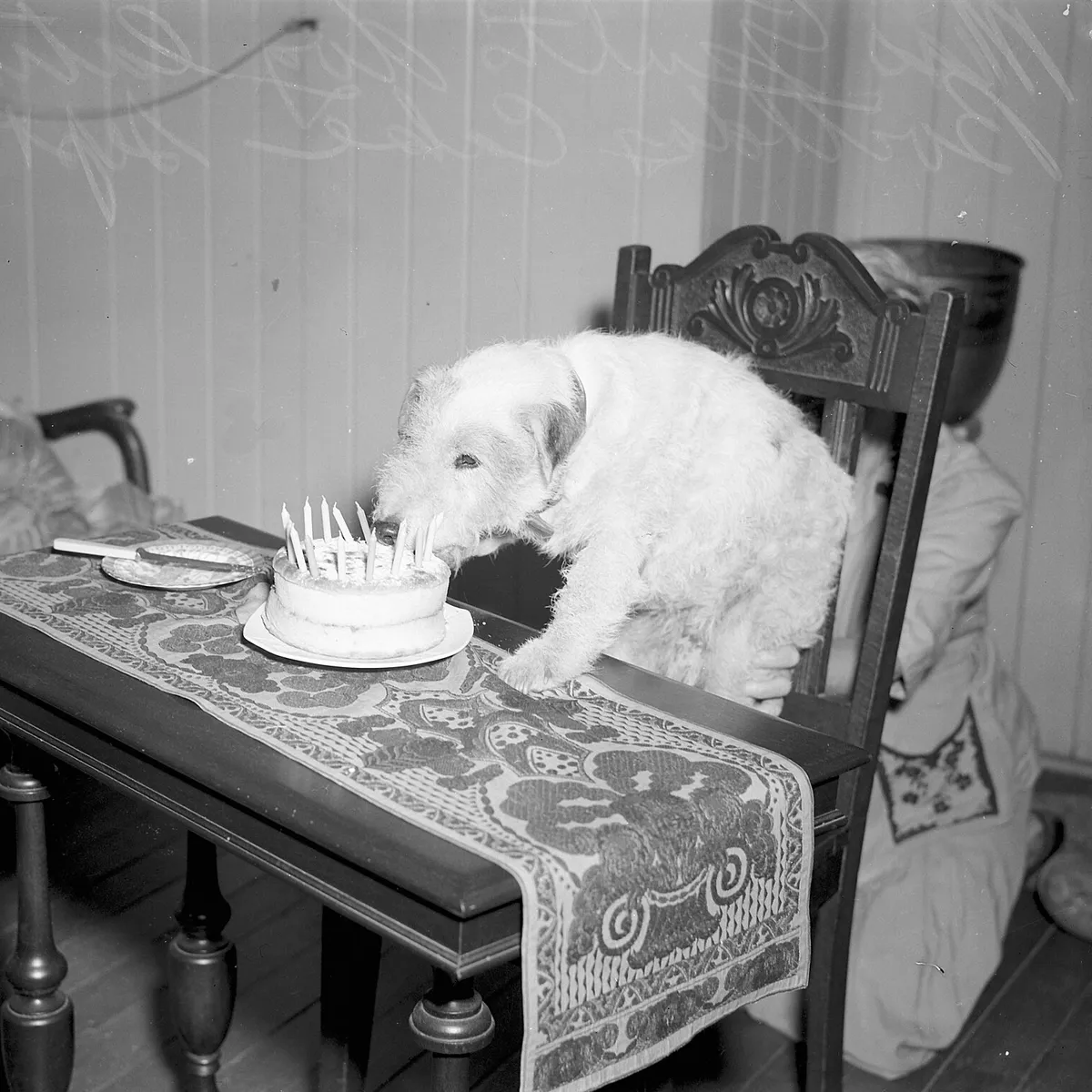
Photo: “Dog sitting at table eating birthday cake with owner Miss Gault - Flickr - State Library of Queensland, Australia” by State Library of Queensland, no known copyright restrictions, cropped.


Not a substitute for your vet
This guide is general information for healthy adult dogs. Every dog is different — age, size, allergies and health conditions all matter. Ask your veterinarian before changing your dog’s diet or care.
Possible poisoning? US: ASPCA Animal Poison Control (888) 426-4435 or Pet Poison Helpline (855) 764-7661 (fees may apply). Elsewhere: call your vet or nearest emergency animal hospital right away.
 Up next 7 Foods Your Dog Should Never Eat (Part 1)

Save this for later — pin it to your dog board so you can find it fast.
Pin itKeep reading
-

Can Dogs Eat Bananas? Yes.
Bananas are a safe, healthy treat for most dogs in small amounts. How much to give by size, how to serve it, and when to skip it.
Small dog: 1–2 slices · Large: ½ banana -

Can Dogs Eat Cheese?
Most dogs can have small pieces of plain cheese. Which cheeses are better, which to avoid, how much to give and when cheese is a bad idea.
Pea-sized pieces of plain cheese -

Can Dogs Eat Peanut Butter?
Most dogs can eat plain peanut butter in small amounts, but some brands contain xylitol, which is toxic. How to read the label and how much to give.
Check the label for xylitol first